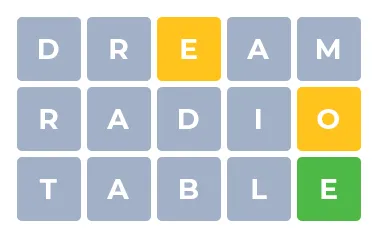
Wordle, acquired by The New York Times (NYT) in 2022, is a deceptively simple daily word game that captured global attention. Players have six attempts to guess a five-letter target word, receiving color-coded feedback after each guess: green for correct letter and position, yellow for correct letter wrong position, and gray for absent letters. Despite—or because of—its minimal mechanics, Wordle Nyt has become a cultural touchstone. This article examines what makes Wordle compelling, critiques and controversies, variations and derivatives, and its broader significance.
Why Wordle Works: Design and Psychology
Simplicity and constraints drive Wordle’s appeal. A single puzzle per day creates scarcity, encouraging social sharing and communal experience. Limited attempts produce meaningful tension without being punishing. Cognitive factors include:
- Pattern recognition: feedback guides strategy through constraints solving.
-** Progressive learning😗* players refine vocabulary and deduction skills across plays.
- Social reward: sharing results (with spoiler-free emoji grids) fosters friendly competition and a sense of belonging.
The game’s design follows core product principles: low friction (no sign-up required initially), a clear objective, fast feedback loops, and a predictable daily ritual. That predictability fits into routines—morning coffee, commutes—turning the game into a micro-habit.
Cultural Impact and Community
Wordle’s viral spread was amplified by social media. Players post their emoji summaries, compare strategies, and discuss tricky words. This communal sharing turned an individual puzzle into a collective phenomenon, influencing language use (e.g., “Wordle streak”) and spawning memes. Educators also adopted Wordle as a classroom tool to build vocabulary and logical thinking.
Criticisms and Counterarguments
Despite wide praise, Wordle has faced several criticisms:
- Accessibility concerns: colorblind players or those with visual impairments can struggle with the color feedback. The NYT later added accessibility options but initial design overlooked them.
1.** Vocabulary bias: **the pool favors certain dialects and common words, sometimes disadvantaging non-native speakers or those with smaller vocabularies. Critics argue this can make the game feel elitist or exclusive.
- Addictiveness and routine pressure: the single daily puzzle creates urgency; some players feel compelled to maintain streaks, turning a light pastime into stressful obligation.
Counterarguments highlight that the NYT has iterated on accessibility and that the single-puzzle-a-day model was an intentional design choice to avoid excessive time sinks. Many derivatives address vocabulary.
LEGO, le logo LEGO, la minifigurine et les configurations des briques et tenons sont des marques déposées de LEGO Group of Companies. ©2026 The LEGO Group.
Mecabricks, le logo Mecabricks et tout le contenu non couvert par les droits d'auteur du groupe LEGO sont, sauf indication contraire, ©2011-2026 Mecabricks.